Snootli Creek Exhibit Game
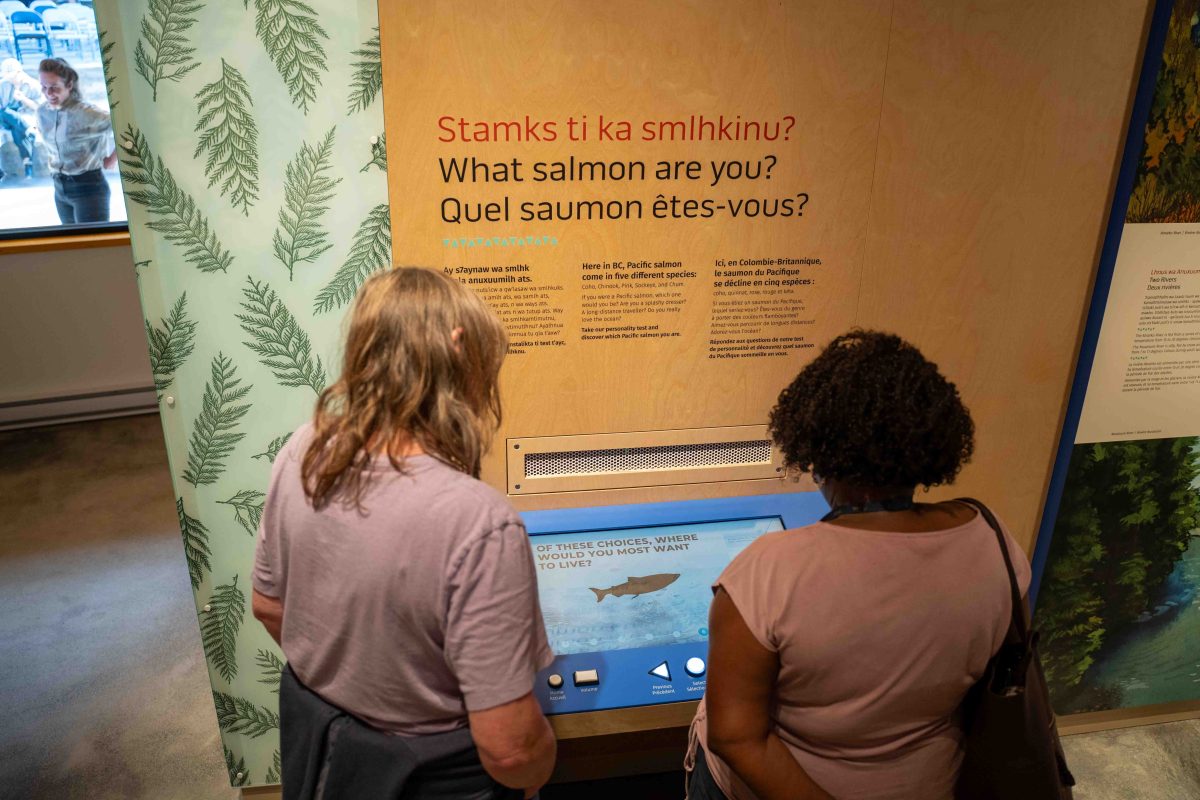
An interactive fishing game designed for a fish hatchery visitor experience — turning a science and conservation story into something hands-on, playful, and genuinely engaging for visitors of all ages.
Role
Experience & Game Designer
Client
Snootli Creek Hatchery
Type
Interactive Exhibit Game
Audience
All ages, visitor-facing
01 — Overview
Making conservation feel like play.
Fish hatcheries do important work — raising salmon, protecting species, and maintaining ecosystems that communities depend on. But telling that story to a general visitor audience, including children, is a real design challenge. Facts and signage only go so far. What holds attention — especially for younger visitors — is something you can do.
The Snootli Creek Hatchery needed an interactive game that could communicate the lifecycle of salmon and the role of the hatchery in conservation, without losing the story in the mechanics. The result was an exhibit-scale fishing game that turned the science into something you could feel through play.
02 — Design Approach
The game as the lesson.
The core design challenge was making the game mechanics and the educational content inseparable — so that playing the game meant learning about salmon, not interrupting the game to receive information about salmon. Every mechanic was grounded in something real: the lifecycle stages, the threats the fish face, the role of the hatchery in protecting them.
Accessible for All Ages
The game needed to work for a six-year-old and a sixty-year-old — no assumed prior knowledge, no required reading, interaction that made sense immediately. Simple input, legible feedback, satisfying play.
Conservation as Context
Rather than presenting conservation facts as interruptions, they were woven into the game's win/lose conditions and narrative moments — making the stakes of the story felt rather than explained.
Exhibit-Scale Design
Designed for physical installation in a visitor space — accounting for throughput, group play, hygiene, and the specific attention dynamics of a museum or hatchery environment.
If visitors leave having played the game, they leave knowing something they didn't when they arrived — without it ever feeling like a lesson.
03 — Reflection
Games are one of the best educational tools we have.
This project reinforced something I've come to believe strongly: when you need to communicate something complex to a mixed audience, games do the job better than almost any other format. The right mechanic can carry an enormous amount of meaning — and the act of playing creates engagement that no amount of signage can replicate.
Designing for a physical exhibit environment also added constraints that sharpened the work — limited time per visitor, mixed group sizes, no onboarding tutorial, no second chances to make a first impression. Those constraints produced a tighter, more considered design than the same brief in a digital-only context would have.