1616 Initiative
A structured design discovery engagement for the Ladd Foundation — uncovering the friction points across three distinct user groups to help a youth hockey mental wellness program grow beyond its broken infrastructure.
Role
Design Researcher & Strategist
Client
1616 / Ladd Foundation
Year
February – March 2024
Type
Discovery & Strategy Engagement
01 — Overview
A meaningful program. A broken experience around it.
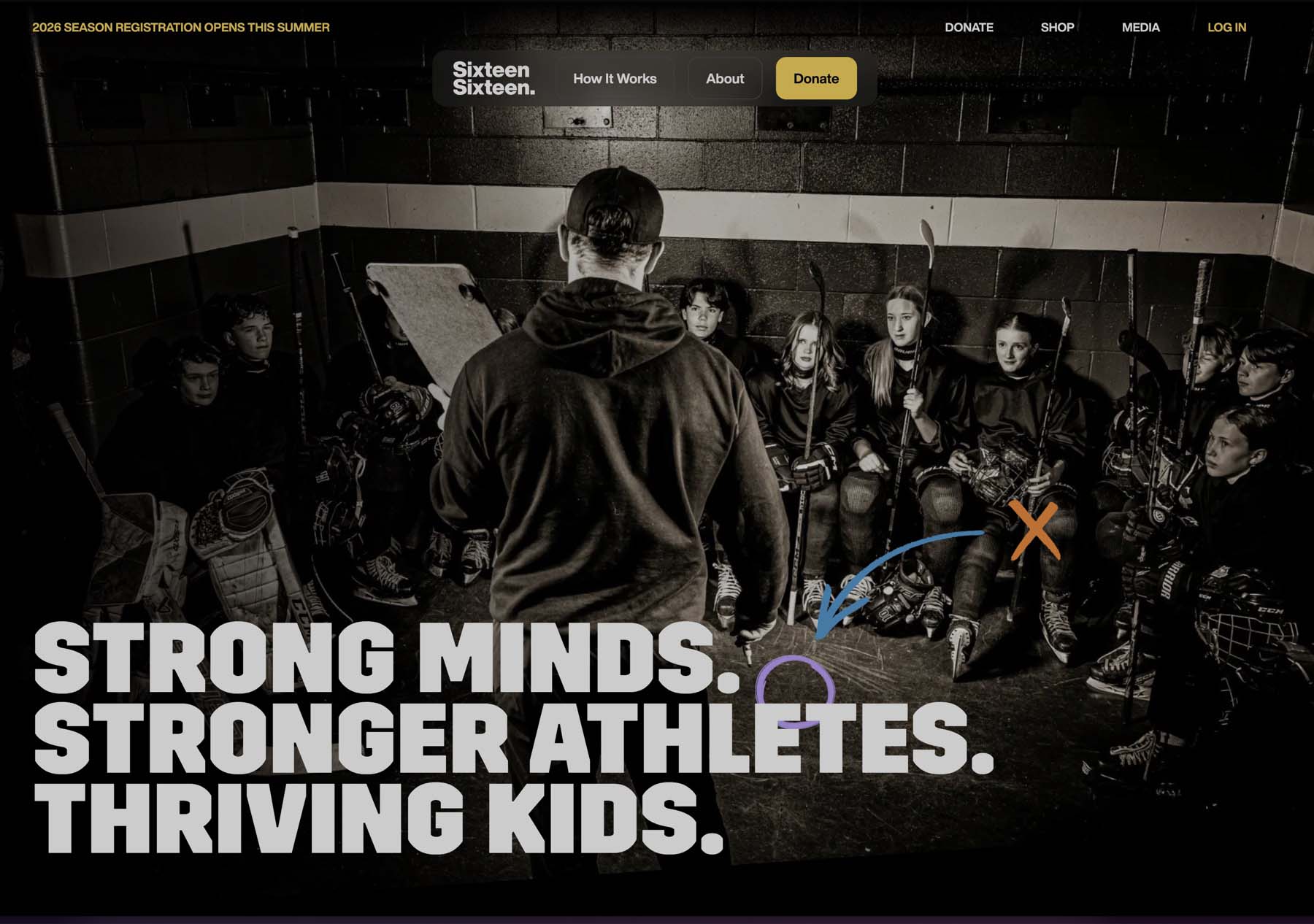
1616 is a free, 10-week virtual mental wellness program for youth hockey players, their parents, and coaches — founded by NHL alumni Andrew and Brandy Ladd. Built around the "buffalo mindset" and the 4Cs (confidence, character, culture, and community), the program delivers short, pro-athlete-led videos and drills designed to build emotional resilience in kids aged 10–12, on and off the ice.
By 2024 the program had grown from 5 teams in its first year to over 110 — but the infrastructure hadn't kept pace. Registration was confusing, onboarding wasn't working, and three completely different user groups — kids, parents, and coaches — were being funnelled through the same broken experience. The Ladd Foundation came to IX Labs not knowing exactly what to fix, but knowing something had to change.
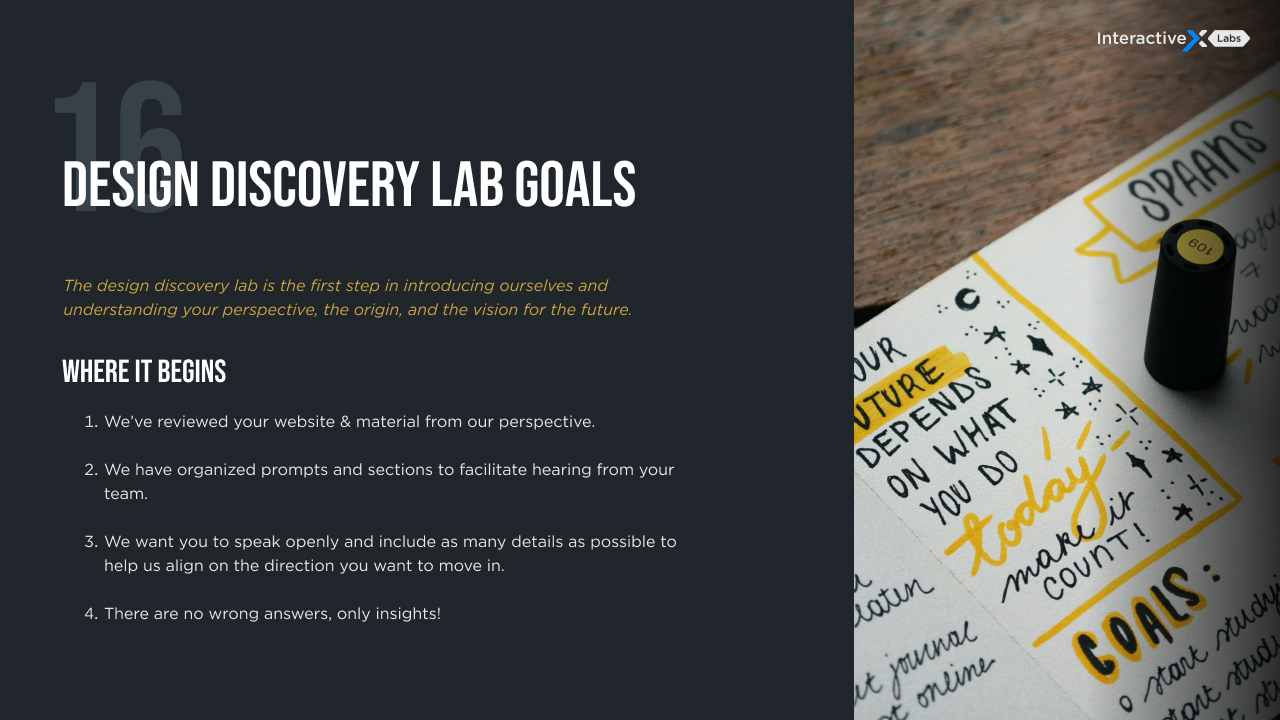
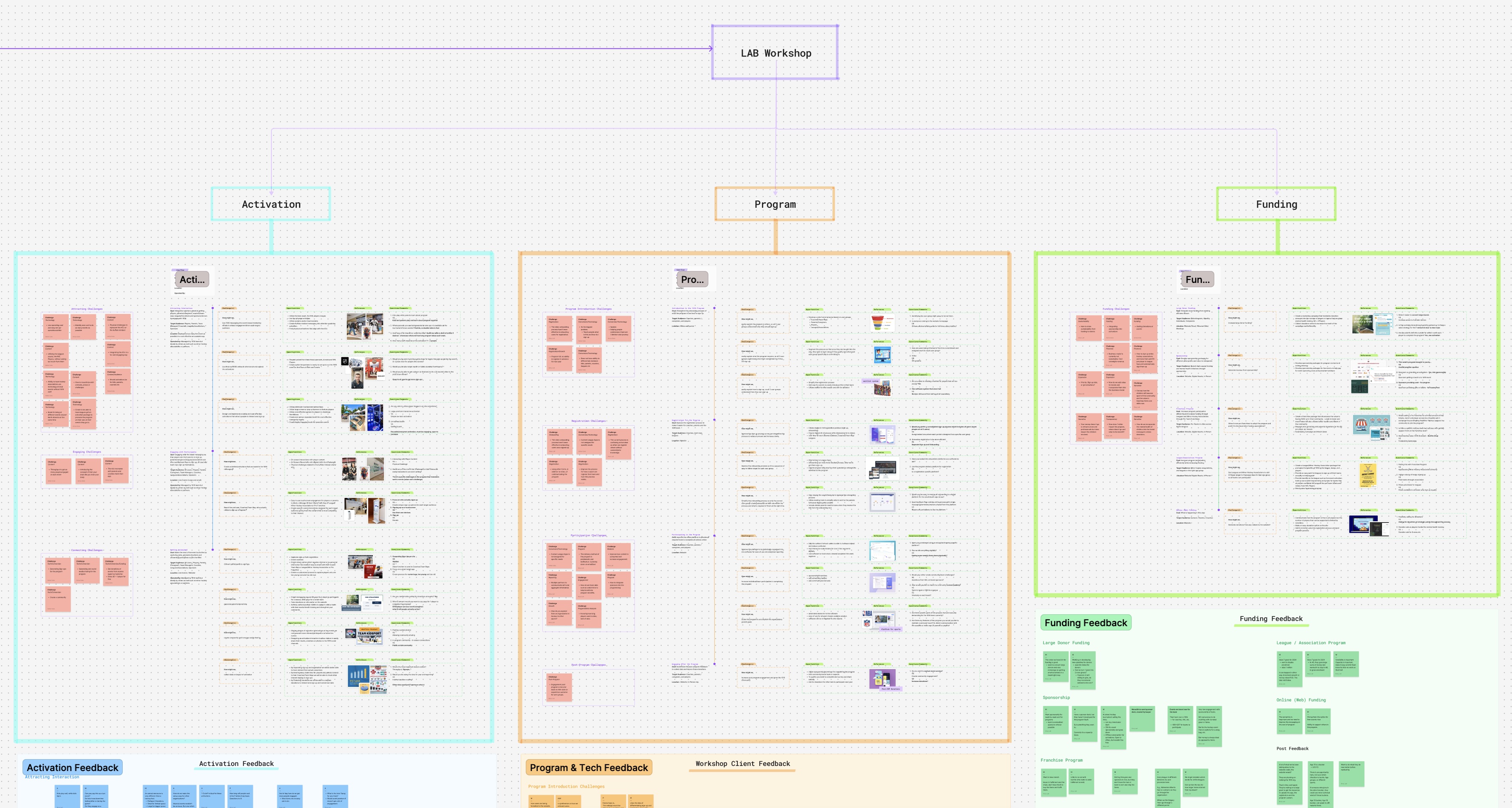
The engagement ran across three structured sessions over roughly a month: a Design Discovery Lab to map the current state, an Ideation Lab to explore the solution space, and an Analysis Lab to present narrowed strategic directions. My role was to design and lead all three.
02 — My Role
Designing the process, not just the output.
This wasn't a design project in the traditional sense — there was no screen to ship at the end. My job was to build a structured discovery process that could surface the right problems before anyone started building solutions.
I designed the three-lab framework, facilitated each session with the client team, synthesised the findings between workshops, and produced the strategic recommendations at the end. Andrew and Brandy Ladd were in the room, alongside Meredith (the program's operational lead) and Phil — each with a different perspective on what was working and what wasn't.
Discovery Lab
Structured stakeholder session to understand the program, the user groups, the current technology, and where the friction was. Designed to surface honest answers, not confirm assumptions.
Ideation Lab
Workshop presenting a broad range of potential directions across three problem areas — Program & Technology, Funding, and Activations — using client feedback to narrow toward the most impactful paths.
Analysis Lab
Presented a refined strategic breakdown of the solutions the client team wanted to pursue, with enough specificity to serve as a foundation for the next phase of work.
03 — Understanding the Program
Three user groups. One experience that wasn't built for any of them.
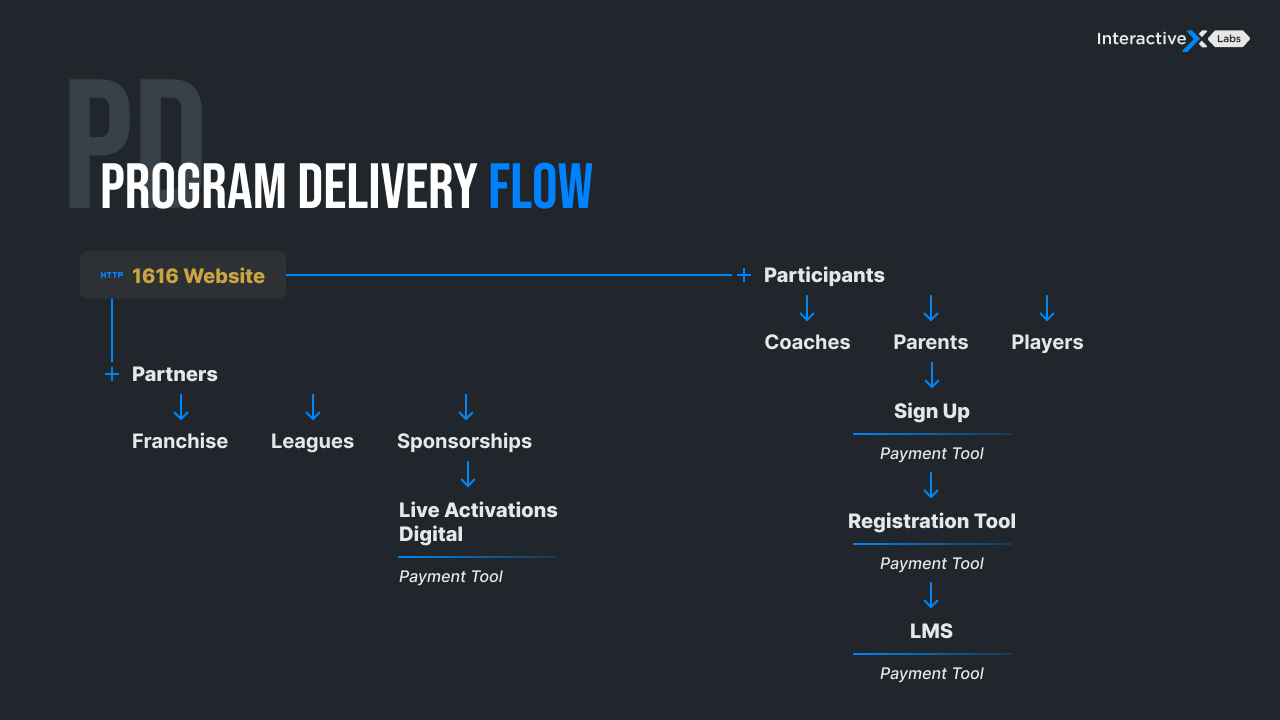
Before we could identify what to fix, we needed to understand the program in detail. Every week, 1616 delivered the same video to three audiences — but what each audience was supposed to do with it was completely different.
The Player
A 5–7 minute video, a reflection prompt, a comprehension question, then a "Live It Out" clip — a pro player sharing how they personally deal with the week's challenge — followed by a specific task to try before the next session.
The Coach
The same video, reframed: are you thinking about this concept with your team? Which players might be struggling with it? A skills layer was added — what to look for, and how to support kids going through it.
The Parent
Again the same video — but with a conversation starter. How to bring up the topic on the car ride home, without it feeling forced or out of the blue. The goal: make intentional use of the time parents already have with their kids.
Three distinct journeys, delivered as if they were one. The program content was thoughtfully designed — the experience around it wasn't.
In year one, registration was done on paper. Year two introduced LeagueApps — but LeagueApps was built for sports leagues, not virtual programs. It had no concept of a parent who is also a coach, or a coach signing up a whole roster without individual players knowing they were enrolled. The system couldn't differentiate between user types, and the operational cost of managing it manually was significant.
04 — What We Found
The gap between finding the program and being enrolled in it.
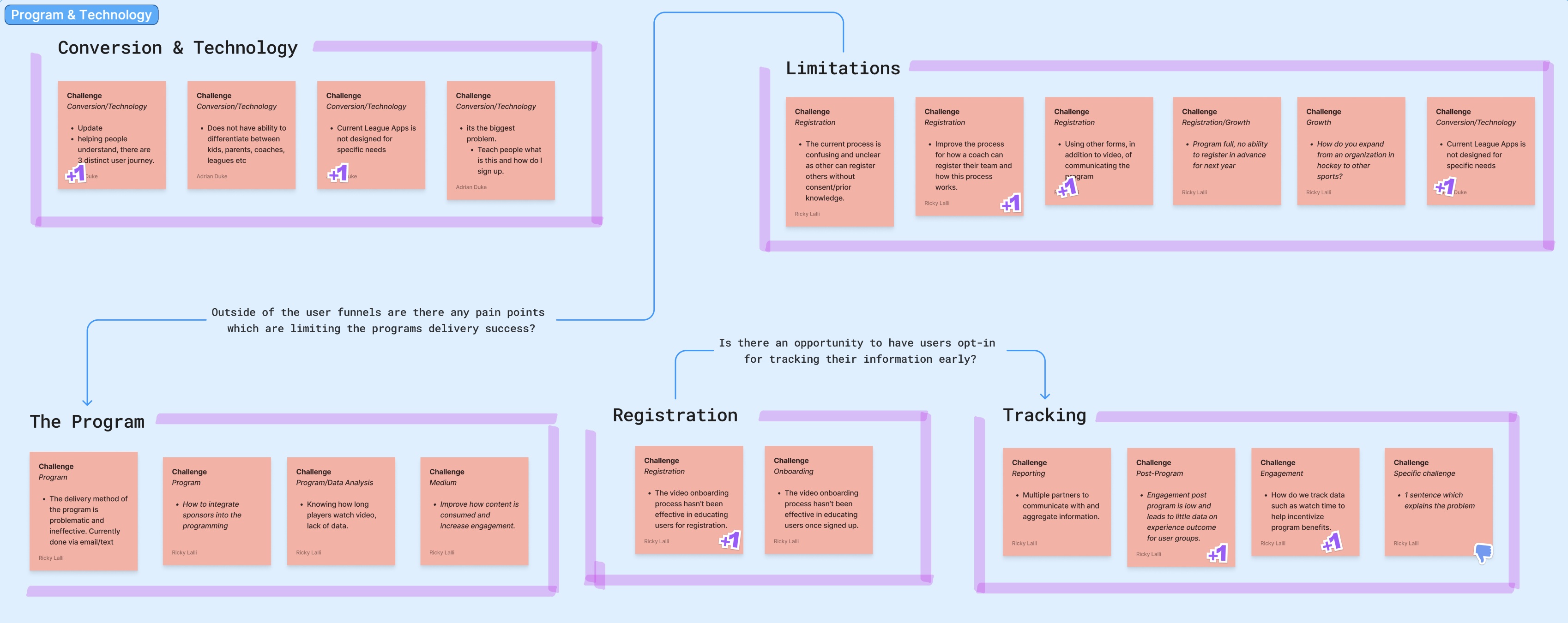
The Discovery Lab wasn't just about collecting answers — it was about asking the questions that rarely make it into a brief. We probed the client on where they saw friction, where their assumptions hadn't held up, and what they hadn't yet been able to articulate. The output was raw: a wide, unstructured set of observations, tensions, and pain points from every corner of the program.
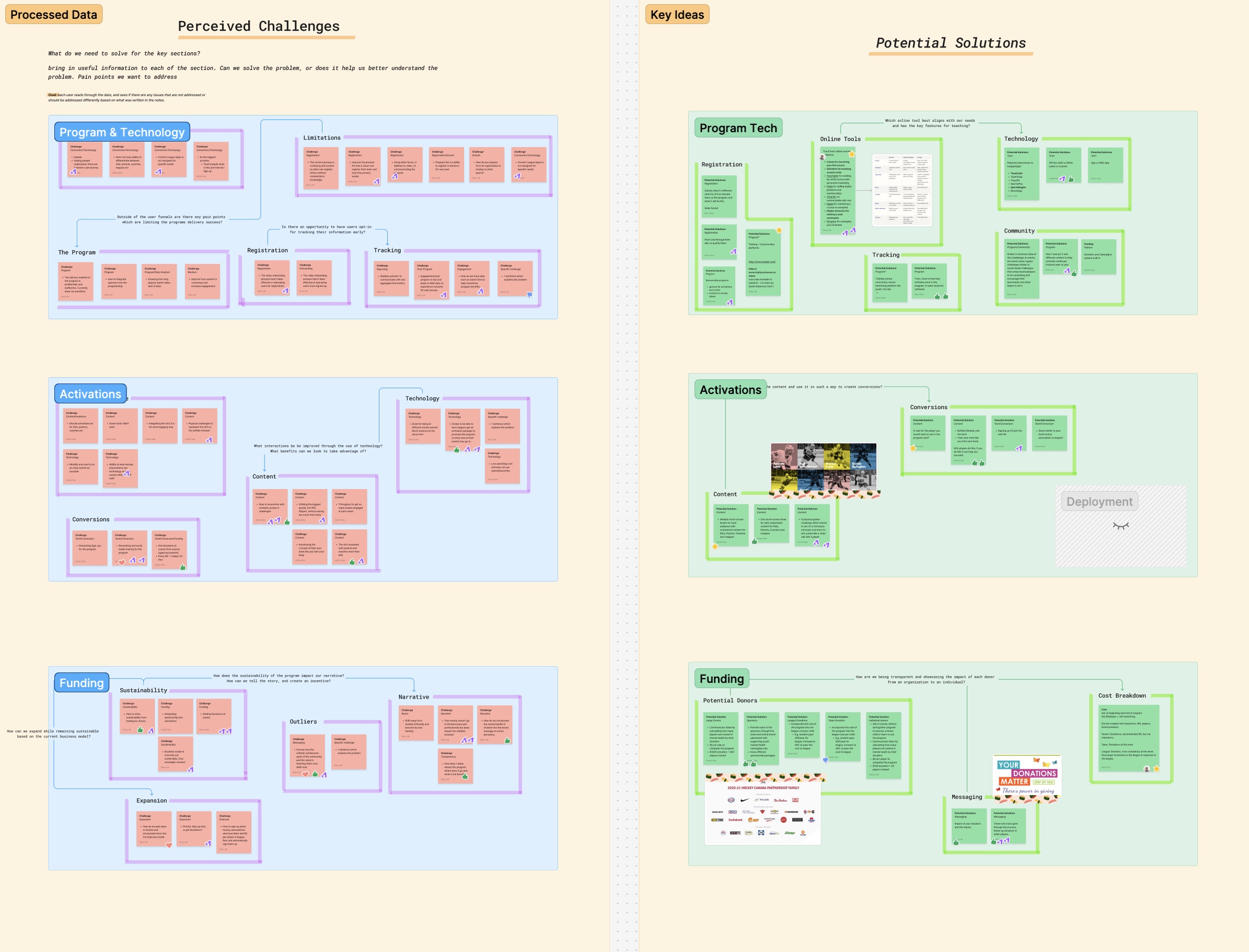
From that raw material, we ran an affinity diagramming session — grouping related insights, collapsing duplicates, and surfacing the underlying patterns. Three core categories emerged: Program & Technology, Activations, and Funding. Everything else could be traced back to one of them.
Registration & Conversion
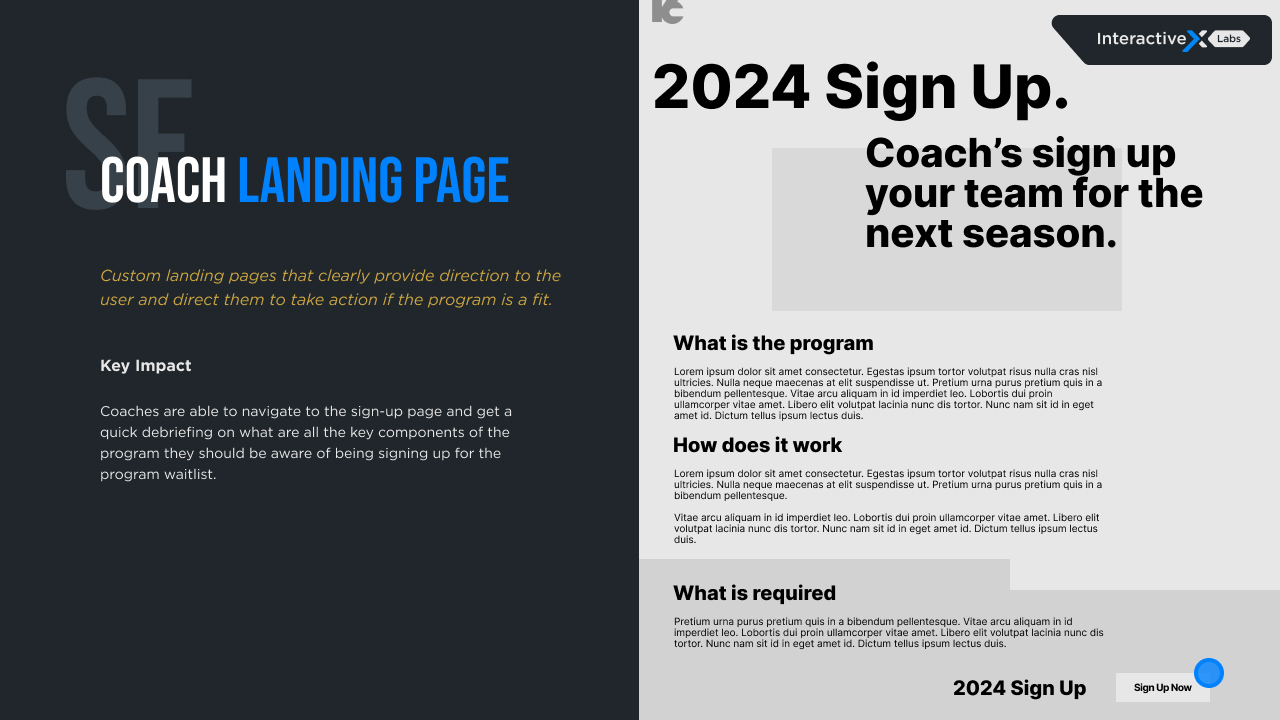
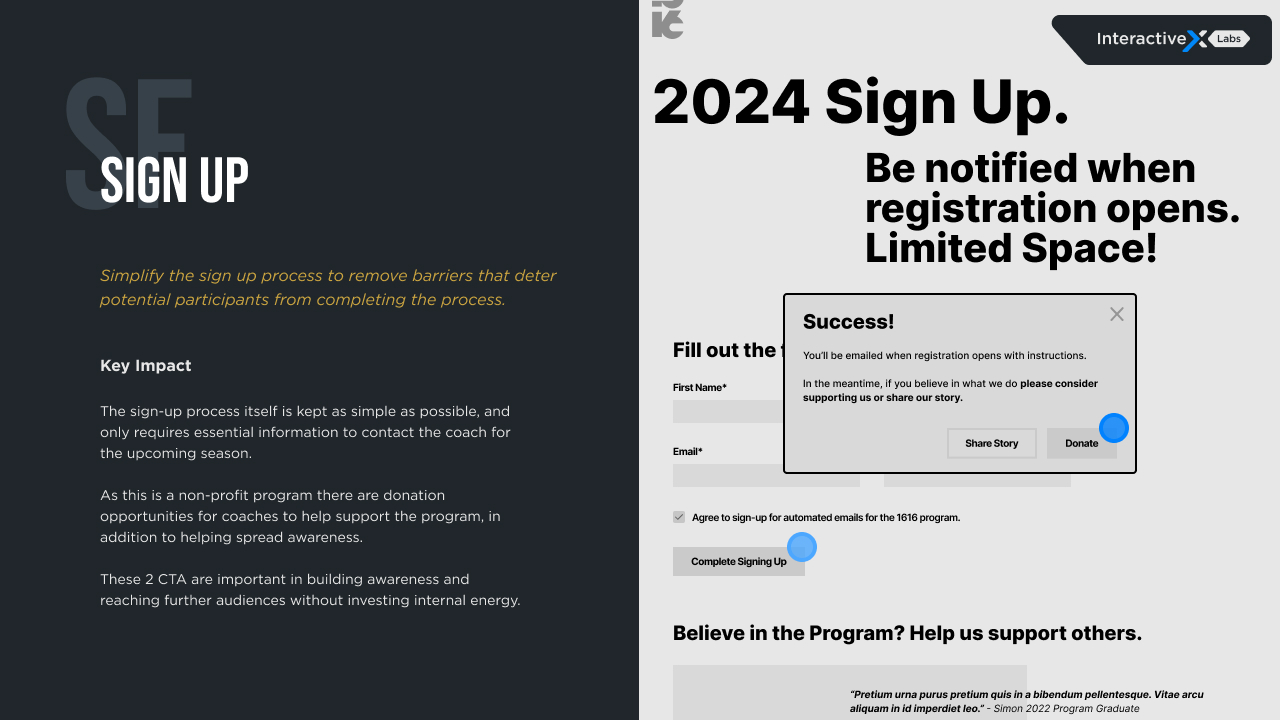
The single biggest problem: people couldn't figure out how to sign up, and the platform couldn't support the way the program actually worked. A coach could register their entire team, but individual players and parents would receive no notification they were enrolled. One person doing it for everyone meant many users didn't know they were in the program at all.
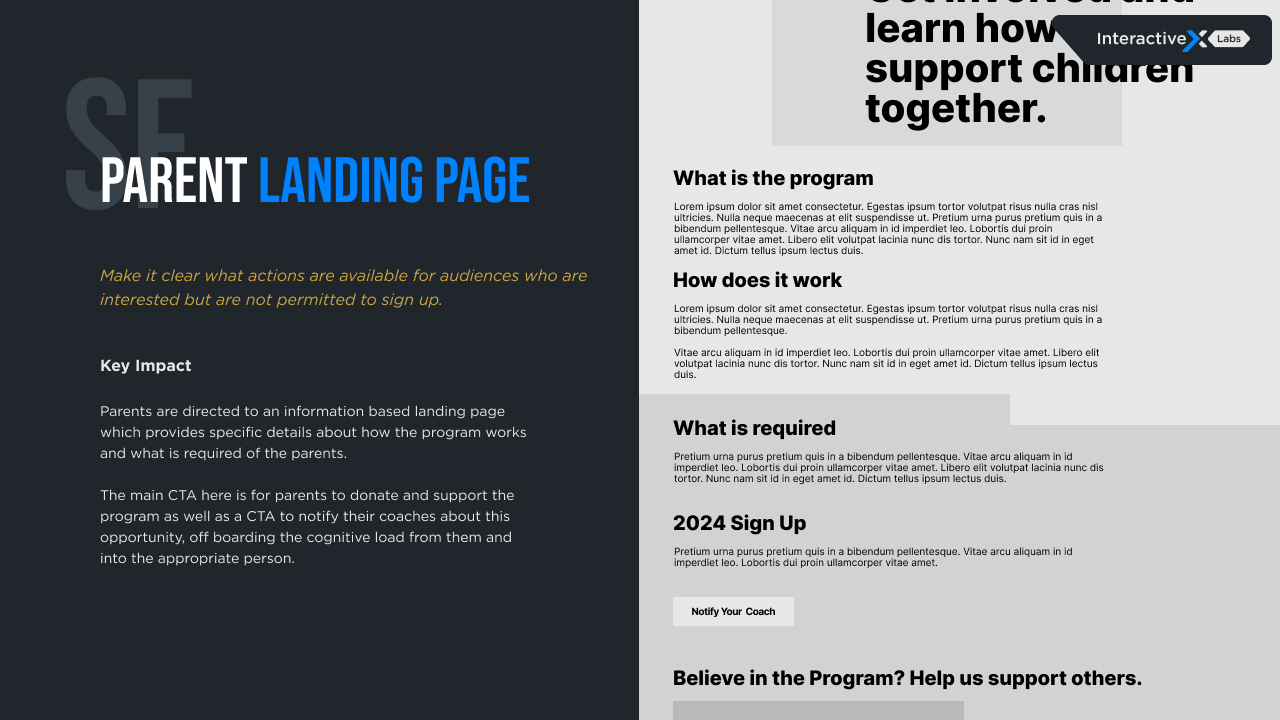
A user could also be all three types at once — a parent who coaches their child's team has three separate journeys to navigate. The current system had no framework for this. The guidance Meredith offered was direct: "It's the biggest problem. Teach people what this is and how to sign up."
Program Delivery
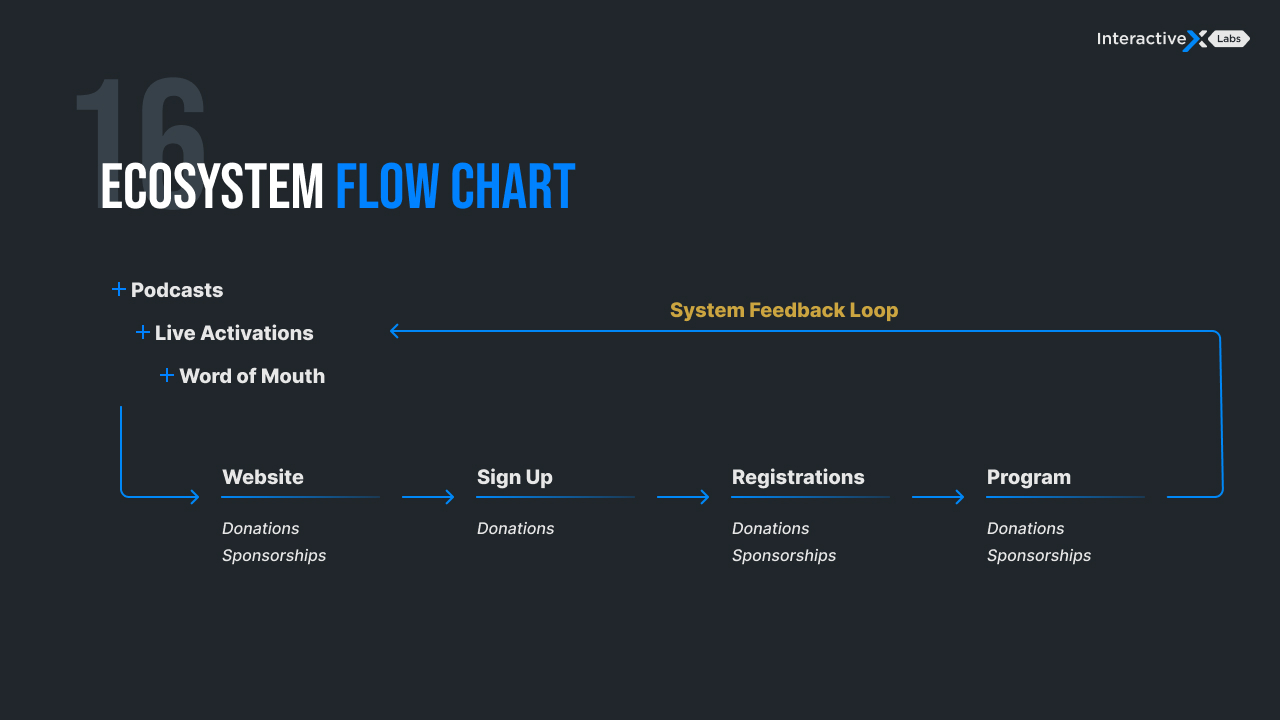
Content was delivered by email and text — once a week, to everyone. If multiple people in a household watched the same video link, the system logged it as a single view. There was no watch-time data, no engagement tracking, and no way to know whether the content was actually being consumed or skipped. Pre-program surveys captured decent data; post-program follow-through was a fraction of that.
The team knew video onboarding wasn't landing — "most people don't read too much, and sometimes the videos aren't watched" — but without data, there was no way to quantify the problem or test a fix.
Funding & Sustainability
The business model wasn't yet sustainable — cost consistently outweighed revenue. The program was free to participants, funded by a mix of league partnerships, events, and donors. But the funding story was difficult to tell: large donors wanted to know exactly where their money was going, and the honest answer — that a portion goes to operations, not directly to kids — was a hard message to land without undermining trust.
The team had a clear vision (double enrolment, raise $1M) but lacked a structured path from here to there across individual donors, league partnerships, sponsorships, and events — each of which operated on a different logic.
05 — From Challenges to Direction
Building solutions together, not presenting them to a room.
The Ideation Lab was designed with a clear goal: get the client actively involved in shaping the solutions, not just reacting to them. A client who only sees a finished recommendation at the end is a client who feels disconnected from the outcome. We wanted Andrew, Brandy, Meredith, and Phil to feel like co-authors of the direction — which meant designing a session where their input actually changed what we pursued.
Working as a cross-disciplinary team, we generated a broad range of potential directions across all three categories before the session. Each area was framed around How Might We statements — surfacing the challenges as open questions rather than closed problems — alongside reference images to ground abstract concepts in something tangible. The workshop then used client feedback to distinguish between directions worth pursuing and those that didn't fit.
Program & Technology
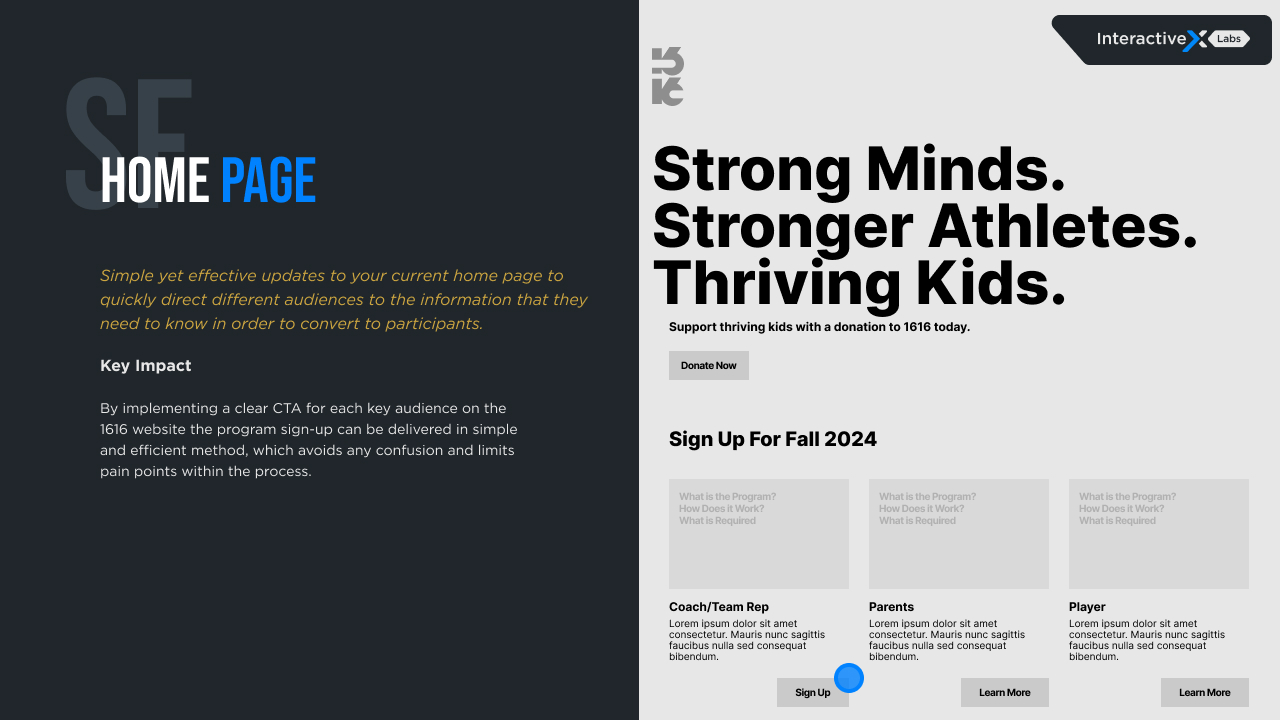
The core question was whether to stay on LeagueApps, move to a different off-the-shelf platform, or invest in something custom. We shortlisted alternatives — TeamLinkt, TeamSnap, PlayyOn, SportsEngine — and explored platforms used by community and learning programs (Kajabi, Mighty Networks, Thinkific) as a reference for what the experience could feel like once decoupled from a sports-league tool. A longer-term direction emerged: separate sign-up (capturing intent year-round) from registration (activating when a season opens), and build differentiated onboarding for each of the three user types from the start.
Funding
We reframed the donor conversation: instead of asking people to fund the organisation, ask them to fund a specific number of players. $5 covers one player for the full program. $1,000 trains 200. A league that adds $5 to each player's annual fee funds itself — no ask required at renewal. This shifted the messaging from "support our operating costs" to something donors could visualise and share.
Activations
The activation side was the most exploratory. The client team was early in thinking about physical presence at tournaments and hockey events — no firm format, no budget, no defined ask. We explored a range of scales from a single touchscreen kiosk to modular multi-station setups, and pushed on the core design challenge: how do you get kids and parents to engage together rather than separately? The 4Cs resonated far more with coaches and parents than with kids — and "scare tactics" around mental health had actively backfired. The direction that stuck: physical challenges that embody the concepts, rather than communicating them through explanation.
06 — Outcomes
A foundation that became a build.
The final phase was the Analysis Lab — a synthesis of everything surfaced across the Discovery and Ideation sessions, distilled into a set of strategic recommendations the client could actually act on. To make the output useful rather than aspirational, we presented two distinct paths: a lean option focused on the highest-impact changes within a tighter budget, and a full build option that addressed the entire problem space. Both were grounded in the same evidence; the difference was scope and sequencing.
That clarity carried directly into the next phase. The team shipped a mobile app and web platform that automated content delivery, introduced differentiated onboarding for each user type, and captured engagement analytics the program had never had access to before.
Following handoff, another designer took the recommendations through to a shipped mobile app and web platform, with me staying involved at key check-in points in a senior capacity. The engagement analytics, differentiated onboarding, and registration architecture that came out of the discovery work all made it into the final product — but post-launch data from the client hasn't been collected yet. Worth revisiting once those numbers are available.
"Partnering with IX Labs transformed our 1616 program this past season. They quickly built a mobile app and automated content delivery, letting participants engage on their own schedule. They brought in new workflows that cut down our small team's workload during the season — a game-changer. They also built ways to capture analytics of program engagement that we've never had access to previously, allowing us to better understand how our participants were engaging with the program."
— Meredith B. Wolff, Executive Director, The Ladd Foundation
07 — Reflection
Retrospective
This project sharpened how I think about the relationship between a product's core value and the experience wrapped around it. 1616's program content was genuinely thoughtful — research-backed, developed with care, and clearly impactful for the kids who actually made it through. The problem wasn't the content. It was everything around it: registration, onboarding, delivery, and feedback loops that had never been designed to work together.
Running a multi-session discovery process also reinforced something about stakeholder research: the right framework changes what people say. In a single meeting, you get the official story. Across three structured sessions with deliberate prompts, you surface the tensions — between what the team wants the experience to be and what it actually is, between what founders built and what operators have to live with day to day. Meredith's account of the onboarding problem was fundamentally different from Andrew's, and both were true.
I'd bring this engagement structure — Discovery, Ideation, Analysis — to any project where the client's brief is based more on a feeling of friction than a clearly defined problem. It's the most reliable way I know to make sure you're solving the right thing.